What the November inspection found

The inspection was unannounced and included an investigation into two complaints. The agency cited seven separate provisions. Only the final item below was principally a record-completeness issue; the others concerned conditions or animal-care practices.[1]

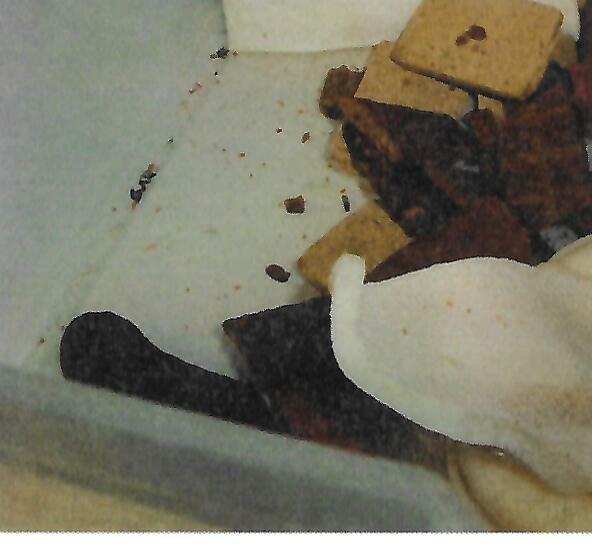
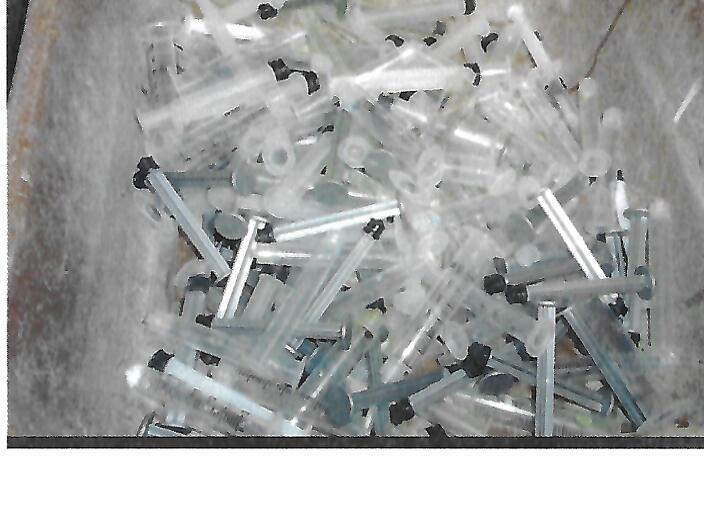
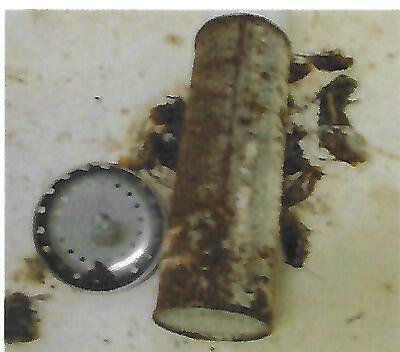
Photographic evidence in the VDACS report

The conditions behind the “non-critical” label

These are the agency’s photographs, not illustrations. Each image was cropped from the agency-supplied inspection report to improve legibility; no image was retouched or otherwise altered. The links open the corresponding report page in context.

Rodents, cockroaches, and unsafe conditions

Inspectors described a significant infestation, abundant droppings in most rooms, decomposing mice on a utility-room floor and in an open food bin, live and dead cockroaches, organic residue in dog runs, and free-roaming cats with access to cleaning agents, appliances, exits, and confined spaces.

2 VAC 5-111-20(A) · report page 3 · first non-critical

Food exposed to contamination

Open animal food was contaminated or exposed to rodent droppings, dead rodents, and insects. Inspectors also found damaged bags and droppings in feeding receptacles and drawers used to store utensils.

2 VAC 5-111-20(D) · report page 4 · first non-critical

Medication administered without the required veterinary process

The report says Schedule VI drugs—including expired prescription drugs left over from animals no longer at the shelter—were administered “regularly in a random manner,” without documentation of a condition or dose determination and in place of veterinary care. It also describes undocumented use of doxycycline and fluconazole and an animal with a suspicious lesion that had not received care.

2 VAC 5-111-30(A) · report pages 5–6 · first non-critical

Repeat finding

Symptomatic animals not adequately isolated

Dogs showing signs of infectious disease were not isolated as required. The shelter’s four isolation kennels could not accommodate the number of dogs receiving doxycycline chronically without prescriptions, and no suitable cat-isolation area was available.

2 VAC 5-111-30(B) · report page 7 · previously cited May 21, 2025

Inadequate care for medically compromised animals

The shelter lacked an adequate protocol for medically compromised animals. Inspectors cited, among other facts, a cat recovering from anesthesia in the same bank of cages as excited, vocal dogs.

2 VAC 5-111-30(C) · report page 8 · first non-critical

Repeat finding

Euthanasia competency, dosing, and syringe practices

Three guinea pigs were euthanized without a veterinary protocol by a person not certified for that species; a two-pound cat received more than twice the directed acepromazine dose; 17 records showed less pentobarbital than the protocol directed; and used syringes containing colored liquid or dried blood were being kept for reuse without procedures for cleaning them or verifying their integrity.

Va. Code § 3.2-6546(E) · report pages 8–10 · previously cited December 10, 2024

Incomplete custody records

Custody records omitted required approximate weights and, when an owner was known, the owner’s address. This was the report’s principal record-completeness finding.

Va. Code § 3.2-6557(B) · report pages 10–11 · first non-critical

What “non-critical” means. VDACS defines a critical violation as one shown to have caused death, serious injury, or suffering, or to have involved denial of inspector access. Other cited noncompliance is classified as non-critical. The term is an enforcement classification—not a synonym for minor, paperwork-only, or harmless. A repeat is a similar violation based on the same factual basis within the preceding five calendar years.[6]

Claims and the inspection record

Each entry pairs a public claim or statement with what the inspection and enforcement records show.

Claim

“Non-critical” means minor or paperwork-only.

Contradicted by the report

Six of seven provisions concerned physical conditions or animal-care practices: sanitation, contaminated food, veterinary care, disease isolation, compromised-animal care, and euthanasia practices. One concerned custody-record completeness.[1]

Claim

The findings were isolated.

Two were formally classified as repeat findings

The report formally classified the isolation and euthanasia-practice findings as repeats of earlier citations. The findings cannot accurately be described as isolated first occurrences.

Claim

The problems were corrected.

Reported by DAHS; not independently verified through a later on-site inspection

DAHS described completed actions and future plans. The reviewed packet does not include a later inspection independently verifying that every action was implemented and effective.[4]

Claim

VDACS waived the penalty.

Accurate, but incomplete

The agency dismissed the proposed penalty after reviewing a submission indicating a good-faith effort to reach compliance. Its letter also says the two repeat violations remain on file.[5]

Claim

“Inspection violations are not uncommon.”

Unsupported as applied to this report

VDACS has said recordkeeping is among the most common shelter violations. But only one of DAHS’s seven findings was principally about records; the others involved conditions or care, and two were repeats. No defined peer data establishes that combination as typical.[1][7][11]

The shelter’s open-admission intake model is important context, but it does not account for these findings. The inspection report does not attribute contaminated food, random administration of medication, incorrect dosages, syringe reuse, or repeated isolation problems to that intake model.

Three separate oversight records one recurring response

The recurring response is minimization.

The shelter inspection stands on its own official record. Two other matters provide institutional context: the Board of Pharmacy proceeding and the humane-investigator case. They involve different laws and evidence, and one does not prove another. What can be compared is DAHS’s recurring response—reducing a documented problem to its narrowest, least damaging description.

These matters involve different laws and distinct evidentiary records. What repeats is the response, not the legal case.

VDACS inspection

Narrow framing

“Non-critical.”
Findings described as common at other shelters.

What the record shows

7 cited provisions 2 repeat findings remain on file

Read the inspection report
Board of Pharmacy investigation

Narrow framing

“One box not checked.”

What the record shows

Four allegations acknowledged more than 1,800 euthanasia records implicated[8]

Read the pharmacy record
Humane investigator

Reported claims; not adjudicated

“Zero seizures.”
“Voluntary withdrawal.”

What the record shows

Every investigation required a record. A search warrant and a motion to revoke preceded the withdrawal.

Read the humane-investigator evidence

Each defense selects the narrowest fact. The underlying duty remains unanswered.

The proposed penalty was dismissed. The two repeat violations remain on file.

The enforcement record shows something narrower than full resolution: the City submitted DAHS’s written response, and VDACS dismissed the proposed civil penalty against the City. The dismissal letter expressly says the two repeat violations remain on file; the other five citations remain in the published inspection report.

April 1, 2026 · VDACS case 2615

Dismissed penalty; two repeat violations retained

VDACS wrote that information submitted on the city’s behalf indicated a good-faith effort “to reach compliance” and dismissed the civil penalty. The two repeat violations remained on file. The letter said that, if the corrective-action plan was not implemented and the same violation was cited in a future inspection, a penalty of up to $1,000 per day could apply beginning with the November 19 inspection date.[5]

Read the dismissal letter

Earlier euthanasia-practice citation

The November report identifies this as the prior date supporting its repeat finding under Va. Code § 3.2-6546(E).[1]

First isolation citation

An unannounced inspection found a dog recorded as having “mange” in general housing while the designated isolation room was unavailable.[2]

Seven findings, including two repeats

VDACS conducted the unannounced inspection described on this page.

Possible penalty of up to $750

The agency notified the city that two repeat findings had been referred for a civil penalty assessment.[3]

DAHS described corrections and plans

Its response acknowledged that this was its “worst inspection since inspections began,” disputed parts of the report, and described pest-control measures, new medical forms, staff training, an end to syringe reuse, and plans for a future isolation area.[4]

Penalty dismissed; two repeat violations kept on file

For penalty purposes, VDACS said the submitted information indicated a good-faith effort to reach compliance. No follow-up inspection appears in the reviewed packet.[5]

What DAHS asserted

“Almost $80,000” in veterinary bills

DAHS cited monthly pest treatment and the building’s landfill location, nearly $80,000 in veterinary spending during the prior fiscal year, new forms and staff training, an end to syringe reuse, rewritten protocols, and plans for a larger isolation area.[4]

Correction verification

No follow-up inspection was included in the records reviewed

Some actions in the response were prospective. A written good-faith submission can support penalty dismissal without an on-site inspection independently demonstrating that every underlying condition was corrected and that the corrections remained effective.

What the tax filings show

Reported veterinary spending increased. The $80,000 figure remains unreconciled.

Form 990 line labeled “Veterinarian Services”
Fiscal yearReported
2023$30,858
2024$41,657
2025$63,899

The FY2025 filing shows a real increase of $22,242, or 53.4%, from FY2024. But its $63,899 “Veterinarian Services” line is roughly $16,000 below “almost $80,000.” The tax filing alone does not reconcile that difference. Other costs may have been classified elsewhere, and the reviewed records do not include the invoices, general ledger, or required monthly city reports needed to test the public figure. Neither total establishes whether the animals identified by the inspector received required care.[9]

The “common” defense has no statewide denominator for this pattern

VDACS has said that recordkeeping is among the most common shelter violations. That does not establish that DAHS’s seven-finding pattern—six findings involving conditions or animal-care practices and two findings classified as repeats—is common. The public sources reviewed for this page do not provide a complete statewide outcome dataset for that comparison.[1][7][11]

Statewide comparison project: DAHS Facts is working to obtain 2025 VDACS inspection reports for Virginia public animal shelters, along with related enforcement and follow-up records, through FOIA. If you already have an official shelter inspection report, send the complete file and its source to contact@dahsfacts.com.

Two findings classified as first non-critical

Newport News Public Animal Shelter

Official letter citing two recordkeeping and identification provisions, July 31, 2024.

Read the county-hosted report

Illustrations, not a statewide comparison. These reports show that some inspections cited no violations and another cited two first non-critical violations. They do not establish statewide prevalence or where DAHS ranks.

Substantial financial capacity amid documented care failures

DAHS’s Form 990 for the fiscal year ending June 30, 2025, reported year-end balances of $1.78 million in net assets, $558,375 in cash and temporary investments, and $42,944 in liabilities. Five months later, inspectors documented contaminated food, inadequate isolation capacity, medication without the required veterinary process, incorrect euthanasia dosing, unsafe syringe reuse, and incomplete records. Together, the inspection report and financial filing show that the documented failures occurred at an organization with substantial resources.[9][1]

$1.78M Net assets
$1.16M Without donor restrictions
$558K Cash and temporary investments
$42.9K Total liabilities

Liquid resources

$558,375 in cash and temporary investments

That June 30 year-end balance equaled approximately 9.1 months of FY2025 expenses. Five months later, inspectors documented an extreme pest infestation, insufficient isolation capacity, medication practices lacking required veterinary oversight, and a repeat euthanasia-practice violation. Those figures provide context for questions about resource allocation.[1][9]

Interest and investment-related revenue

Interest and investment-related revenue rose sharply in FY2024 and FY2025

Interest, dividends, and similar income rose sharply in both years. After including reported net losses on sales of other assets, the combined Part I amounts were $14,608 in FY2024 and $23,827 in FY2025. The FY2025 annual deficit of $73,647 already reflects that $23,827. Line 3—interest, dividends, and similar income—alone totaled $42,732 across FY2024 and FY2025, or 97.5% of the seven-year total shown in the reviewed returns.[9]

Recent Form 990 investment-related revenue
FYInterest, dividends & similarNet gain / loss on asset salesPart I total
2023$486$0$486
2024$17,100−$2,492$14,608
2025$25,632−$1,805$23,827

Four consecutive surpluses built net assets to $1.85 million

IRS Form 990 figures; fiscal years end June 30. Cash includes reported cash, temporary cash investments, and separately reported other securities.
Fiscal year Revenue Expenses Annual result Cash / securities Net assets
2019$396,373$450,703−$54,330$174,699$1,417,556
2020$403,343$459,424−$56,081$213,522$1,361,475
2021$583,303$441,207+$142,096$303,297$1,503,571
2022$607,620$494,335+$113,285$501,443$1,616,856
2023$780,364$550,557+$229,807$727,326$1,846,663
2024$652,521$645,504+$7,017$640,959$1,853,680
2025$665,763$739,410−$73,647$558,375$1,780,034

The seven-year record. Four consecutive surpluses from FY2021 through FY2024 totaled $492,205 and raised net assets to $1,853,680. DAHS reported a $73,647 deficit in FY2025, but still ended that year with $1,780,034 in net assets—$418,559, or 30.7%, above FY2020.

Accumulated assets

Net assets remained near $1.8 million after the FY2025 deficit

The filing reported $1,156,422 without donor restrictions, $623,612 with donor restrictions, $558,375 in cash and temporary investments, and $42,944 in total liabilities. The more conservative comparison with operating failures uses the $558,375 in cash and temporary investments, not the $1.78 million net-assets total.

Veterinary spending

A real increase; an unreconciled public claim

The Form 990 “Veterinarian Services” line rose from $41,657 in FY2024 to $63,899 in FY2025. DAHS separately said it spent “almost $80,000” on veterinary bills. The reviewed records do not reconcile the roughly $16,000 difference. Costs may have been classified elsewhere, and the monthly reports required by the city contract were not included in the reviewed records.[4][9][10]

Source files. Public copies of the FY2023–FY2025 Form 990 filings and IRS XML files, where available, are in the document library.
Evidence basis and limits

Official records anchor this page. The inspection report, penalty notice, DAHS response, and dismissal letter are linked below. The VDACS dismissal letter states that the civil penalty was rescinded and the two repeat violations remain on file.

Primary-record limits

Two limits of the available record

The records reviewed did not include a statewide set of comparable VDACS inspection outcomes or a later on-site reinspection of DAHS. This page draws no factual conclusion from either absence.

Contribute official records

Send primary documents for review

Official shelter inspection reports, follow-up records, substantive responses, and corrections can be sent to contact@dahsfacts.com.

Sources

Official documents are linked in the public document library. The November 2025 inspection report is published exactly as the agency supplied it. Browse the library’s VDACS inspection collection, illustrative official comparisons, and tax and governance records.

  1. [1] Inspection report Virginia Department of Agriculture and Consumer Services, unannounced animal-shelter inspection conducted November 19, 2025; report issued January 16, 2026. Inspection report (agency source copy).
  2. [2] Earlier inspection VDACS unannounced inspection conducted May 21, 2025; report issued June 27, 2025. Inspection report.
  3. [3] Penalty notice VDACS, Notice of Violation and Good-Faith Conference, case 2615, February 3, 2026. Notice.
  4. [4] DAHS response DAHS response to the notice, March 2, 2026, and related city/VDACS correspondence. DAHS response · correspondence.
  5. [5] Dismissal letter VDACS, dismissal of the civil penalty, case 2615, April 1, 2026. The letter says the two repeat violations remain on file. Dismissal letter.
  6. [6] Enforcement definitions VDACS, Comprehensive Animal Care Laws Civil Penalty Matrix.
  7. [7] State data sources Public information from VDACS and the Virginia Department of Planning and Budget: Animal Care; FOIA requests; animal-care inspection performance measure.
  8. [8] Pharmacy record Virginia Board of Pharmacy informal conference, June 24, 2026. DAHS Facts-produced summary and cleaned transcript derived from the hearing audio (not an agency complete record) and hearing audio.
  9. [9] IRS Form 990 filings DAHS Form 990 series for fiscal years ending June 30, 2019, through June 30, 2025. Earlier returns are indexed in the document library and on ProPublica’s IRS-derived filing index. Electronic filing renderings: FY2023, FY2024, and FY2025. See the IRS’s Form 990 bulk-data page.
  10. [10] City contract City of Danville contract with DAHS: paragraph 3 requires monthly categorical expense reports, including veterinary services and medicine (page 2); paragraph 16 requires an annual independent CPA examination and delivery of the report to the city manager within 180 days after fiscal year-end (page 7).
  11. [11] Recordkeeping context Cardinal News, “Animal welfare group hopes to aid Danville shelter as euthanasia debate continues,” October 24, 2025, quoting VDACS on the prevalence of shelter recordkeeping violations.